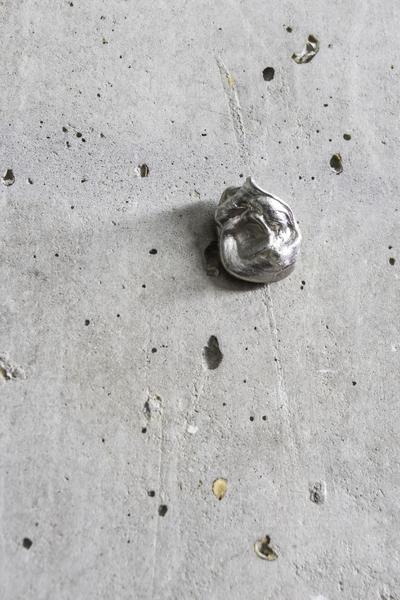
Small green knife
Solo show @ die raum, Berlin, 2026.
feat. a text by Hannah Regel.
Thank you Marie Due.
Kindly funded by The Danish Art Foundation, Den Hielmstierne-Rosencronske Stiftelse and Grosserer L. F. Foghs Fond.
Eighteen Maxims of Order and Neatness by Hannah Regel
1.
It’s one of those nights in late spring where being coatless in the dark feels emancipatory, and my friend Jacob and I are standing in an alleyway that serves as the smoking area of a pub.
‘You’d make a terrible mother,’ he tells me.
‘Excuse me?’
‘Because you never know where your bag is.’
‘What do you mean?’
‘Well—Where is it now?’
2.
The first time I take my laptop to a cafe to write after giving birth I feel lightheaded. It’s warm where I’m sitting by the window so I take my jumper off. Then, feeling exposed, put it back on. I take it off and on a second time, fussing now, feeling watched by everyone. I think: I am like a tortoise without its shell.
3.
My friend Cecilie, a sculptor, asks me to write a text for her solo exhibition and sends me her research on envelopes and pockets, folds and cracks. Among them is a pamphlet from the V&A museum, dedicated to women’s pockets. It cites a text from 1819 titled Eighteen Maxims of Neatness and Order, by the perfectly named Theresa Tidy.
4.
My husband and I have put the baby successfully to bed and are preparing dinner for two friends. Finished with his particular task my husband takes a seat at the kitchen table, sipping wine, chatting to our guests, and picking at crisps from a bowl, whilst I continue to cook. Facing away from the three of them toward the worktop, mashing the potatoes, I feel a sudden sense of humiliation. It penetrates my entire being. I want to burst into tears or run from the room or scream at them to all look away; I don’t want them to see me doing it. Of course I do none of these things, only continue to mash, silently with my back turned from the conversation and my elbow working rhythmically: a mother.
5.
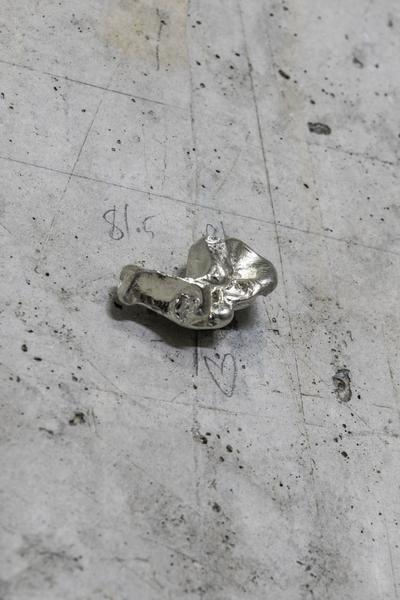
I read that historians struggled to find out what women of the past kept in their bags. Why would anyone keep a record of something so commonplace and personal? They eventually gained some insight through records of criminal trials and the itemised lists after theft. During a court case in 1794, Richard Bullen was able to identify an old green knife belonging to his wife. It was marked 'of no value' since she’d owned it before they were married.
6.
My husband says pockets as an idea is fantastic. ‘They’re the subterranean index of life’s stages!’ he says. He then describes how the weight of beer bottle caps in his pockets decreased.
7.
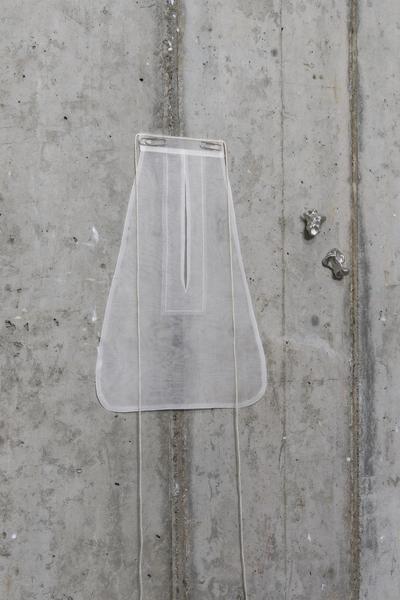
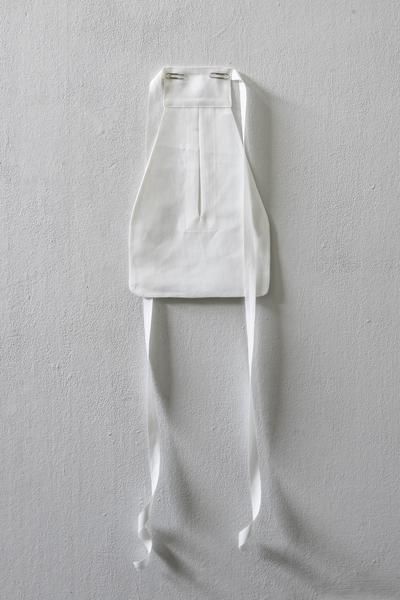
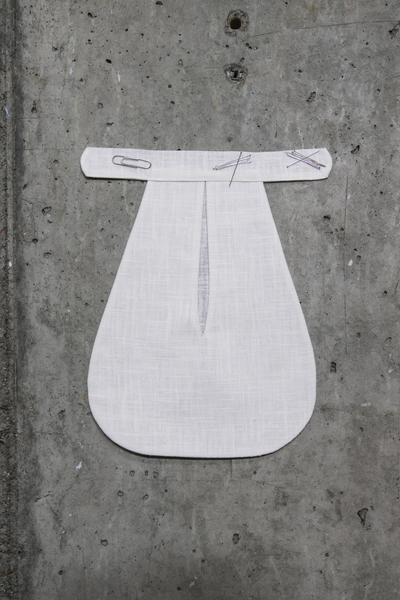
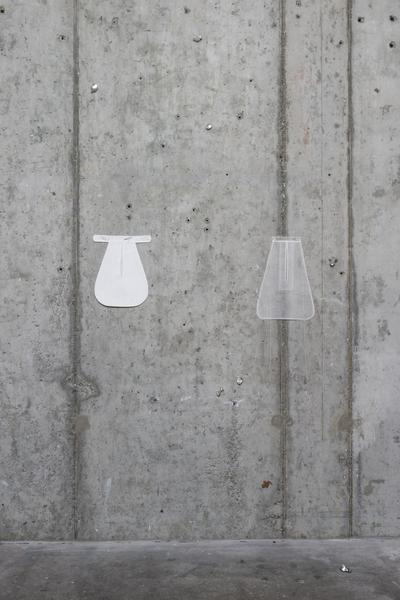
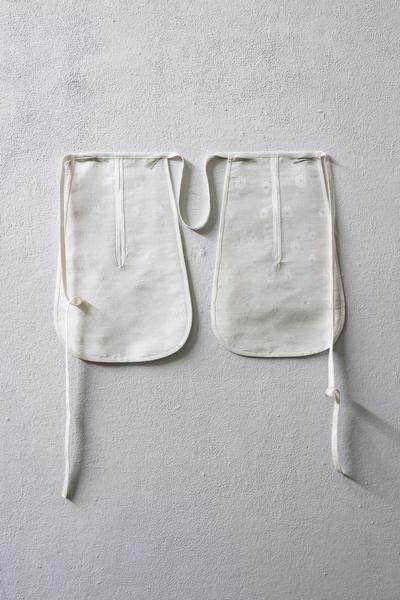
Cecilie and I meet online to discuss the text. We worry that, having just had a child and therefore unable to think about anything else, I will accidentally skew the narrative of the show. ‘We have to keep it a little sexy, nothing too maternal.’ Cecilie has commissioned a series of tie-on pockets to be made in silk. She holds one up to the camera and we both examine it. It is delicate and deeply serious, ‘Oh but it is a mother,’ we despair.
8.
Among the research papers Cecilie shares are also the letters of Bernadette and Rosemary Mayer, the envelope poems of Emily Dickinson, Virginia Woolf’s Solid Objects and Anne Boyer’s Ideas for Monuments, which she wrote with her husband Jacob. Jacob, who feared for the whereabouts of my handbag.
9.
In a letter to her sister Bernadette, Rosemary Mayer describes the expanded mental landscape she finds herself in after deciding to live with her partner, John. She writes, ‘It’s as though my repertoire has enlarged from a few ways of being alive which were produced on demand by being in certain situations, to a wardrobe full of all-sorts of states, a big wooden wardrobe with many mirrors to watch - and I have the time to look in all the mirrors, to try everything on.’ The metaphor stays with me. It’s true love! The capaciousness to make experiments in living as casual as seeing if this hat goes with that.
10.
Bernadette takes a wholly different approach to transformation. Her book of prose poems, The Desires of Mothers to Please Others in Letters, written throughout the duration of her third pregnancy, opens with the instruction: ‘THROW STUFF AWAY’.
11.
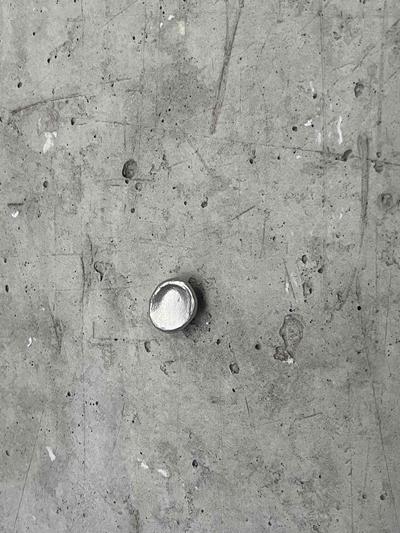
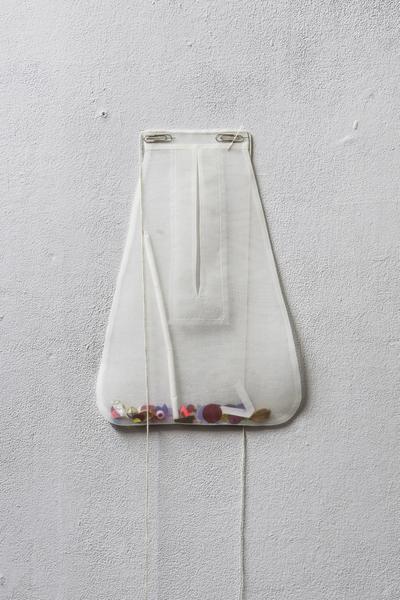
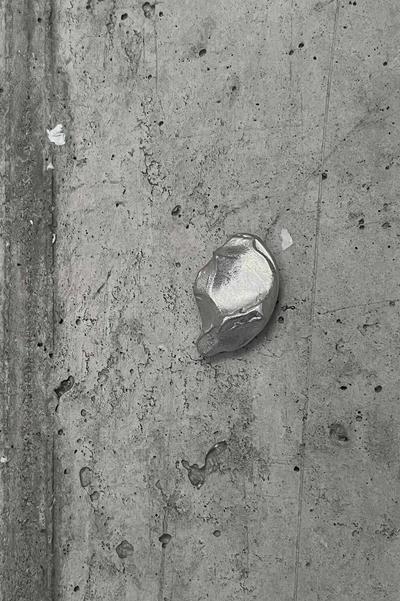
Cecilie emails me more references for the show. Among them are Alina Szapocznikow’s chewing gum sculptures. Tiny chewed-up figures in jaunty little poses. I’m glad to see them, they’re a constant for me too; they have a poignancy I’ve never been able to pin down. In the email she also lists the contents of her daughter Iris’ pockets: sequins found in sandboxes, a stick, and glittering sweet wrappers. I’m moved by the seriousness of the stick (the vast, complicated imaginative world it implies) alongside the sweet wrapper. And then I see it. The chewing gum sculptures are childhood: dark woods, delight.
12.
Cecilie sends me another email (‘I keep on collecting!’), this time she’s photographed the contents of Iris’ pockets. Scattered on a blank sheet of paper is; a scrap of folded paper, a handful of sequins, an empty peanut shell, a stone, two white straws, two twigs and a small pink feather. Iris has given her mother permission to use these objects in her show. All except the feather.
13.
I fish out a book I have on Szapocznikow. It falls open on a photograph of the artist I don’t think I’ve seen before. Whenever it turns to the child in something I’m reading I get a jolt, a thrill, a friend of mine (another new mother) told me recently. The photograph is of Szapocznikow with her son, Piotr, about the age mine is now. She is holding him on a desolate street in Warsaw, before the empty shell of a building. Beside her is a pile of rubble and behind is a washing line. The year is 1955. The strange ghostly-white limbs of the laundry reaching out behind her recall the chewing gum sculptures. She and her son are smiling broadly.
14.
(Dark woods, delight).
15.
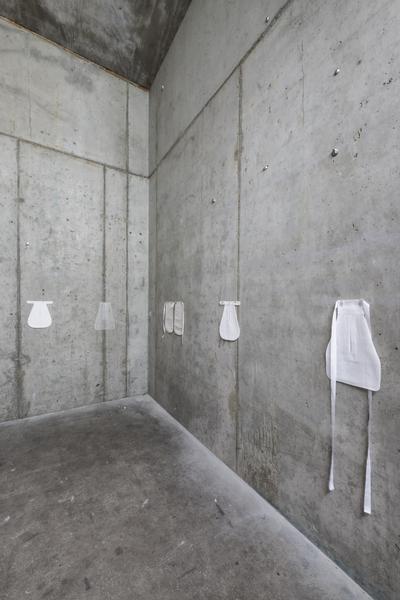
The first install images arrive in my inbox. They show the silk pockets, hung at the height they sit on the body, against a putty coloured wall. Their ties are arranged as if they’ve been blown about by the wind: a washing line!
16.
Since giving birth, getting dressed has become a problem to solve. First, there was the body; its changes and leaks. Second was the logistics. We live in a flat on the second floor and there is no lift. For a while I would strap the baby into his bouncy chair and run the pram down first. But he would always scream, echoing across the courtyard as I ran back up two stairs at a time. Eventually I took to wearing him everywhere and still do, which means the shoes must be practical, the coat must be capacious and pockets are essential. As I descend the stairs, I look like I’m set to climb Mount Everest.
17.
I’m reminded of Rosemary Mayer in her infinite wardrobe, it’s ‘many mirrors’. As far as love is concerned, the metaphor has some flaws. I feel dowdy.
18.
I am in a changing room trying on jeans. I walk out to see how they look from afar through a mirror on the shop floor, leaving my handbag slumped against a stool in the cubicle. When I return I enter the wrong one by mistake. It’s empty. Even though I know the child is safely taken care of elsewhere, for a brief moment I panic.